
The Big 3 Core Exercises for Back Pain Relief (Oklahoma City, OK)
If you’re dealing with back pain, one of the most common questions is:
“What should I be doing at home?”
You’re not alone in asking that. Many people try stretches, massage, or different exercises—only to find that some help, while others seem to make things worse.
That’s because not all movements are designed to support your spine the right way, especially early on.
The exercises below are simple, controlled movements designed to improve stability and help your body move more efficiently. They’re often referred to as the “Big 3”: the curl-up, side plank, and bird dog.
Each one has a specific purpose. Together, they help reinforce the kind of control and support your spine needs during recovery.
This guide will walk you through each exercise step by step so you can perform them correctly and get the most benefit.
If anything feels unclear—or doesn’t seem to help—ask. Your recommendations should match how your body is responding, not a one-size-fits-all approach.
Before You Start: A Quick Note on Bracing
Before each exercise, gently tighten your abdominal muscles to create support through your midsection.
This isn’t about sucking your stomach in or flattening your back. It’s a light, natural tension.
Some people find it helpful to think about preparing for a light tap to the stomach. Others do better with a different cue—like gently tightening your core as if you were about to give or receive a hug.
You should still be able to breathe normally while maintaining that tension.
You’ll use this same bracing during each of the exercises below.
Why Bracing Matters
Most people think core support comes from “tight abs” or a flat stomach. In reality, your spine is better supported when your breathing muscles, abdominal wall, pelvic floor, and spinal stabilizers work together to create balanced pressure and control.
This short demonstration helps show why that matters. Your core works more like a supportive cylinder than a flat wall, which is one reason the Big 3 focus on stability and control instead of crunches or large, repeated spinal movement.
If this concept is new to you, the exercises below will help you start building that stability in a simple, step-by-step way.
Download the Big 3 Quick Guide
Prefer a simple version you can save or print?
If you’d like a quick reference you can use at home, we’ve put together a one-page guide with the Big 3 exercises, bracing cues, and simple instructions.
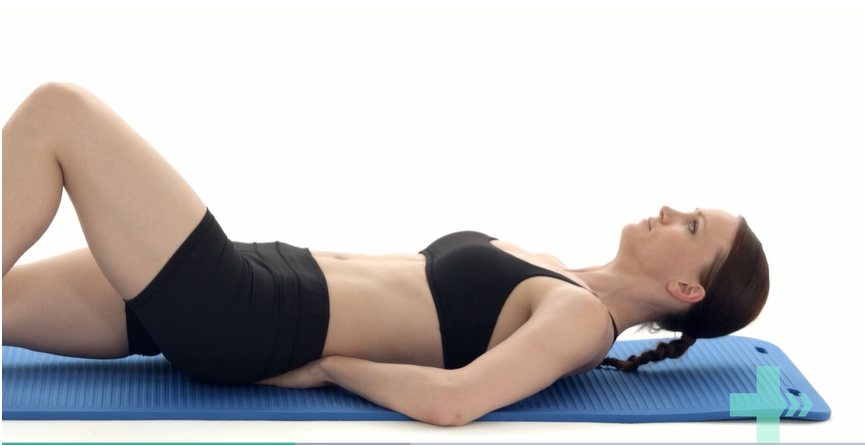
This is the final position of the Curl-up. Image courtesy of Physitrack
Curl-Up
The curl-up is designed to improve stability in the front of your core while minimizing stress on your spine.
It helps your body learn how to create support without excessive movement, which is important for protecting your back during daily activities.
When done correctly, this exercise builds control rather than just strength.
How to Perform It
Lie on your back with one leg straight and the other bent, with your foot flat on the ground.
Place your hands under your lower back to help maintain a neutral spine.
Gently brace your abdomen, then slightly lift your elbows off the ground.
From there, raise your chest just enough to create tension, while keeping your neck in a neutral position and your eyes focused on the ceiling.
Hold briefly, then return to the starting position and repeat.
A short demonstration video will be added here. For now, follow the written steps below and focus on control, not speed.
What to Focus On
Keep your movement small and controlled—this is not a full sit-up.
Your neck should stay relaxed. The movement comes from your chest, not your head.
Breathe normally and avoid holding your breath.
The goal is to create stability, not fatigue.
Sets and Repetitions
Start with short holds of about 8–10 seconds.
A simple progression is to perform a few repetitions, rest briefly, then complete a smaller number of repetitions on the next set.
Increase gradually based on how your body responds the following day.
Side Plank
The side plank is designed to build stability along the sides of your core, helping support your spine during everyday movement.
It reinforces your body’s ability to resist unwanted motion, which is just as important as creating movement.
How to Perform It
Lie on your side with your elbow directly under your shoulder. Your legs can be straight or bent, depending on your starting level.
Gently brace your abdomen, then lift your hips off the ground so your body forms a straight line from your shoulders to your knees or feet.
Keep your head in a neutral position and maintain steady breathing throughout the hold.
Hold briefly, then lower under control and repeat.
A short demonstration video will be added here. For now, follow the written steps below and focus on control, not speed.
What to Focus On
Keep your body in a straight line without letting your hips drop or rotate.
Your shoulders and hips should stay stacked throughout the movement.
Focus on creating tension through your core rather than pushing for longer hold times.
The goal is stability and control—not fatigue.
Sets and Repetitions
Start with short holds of about 8–10 seconds.
Perform a few repetitions, rest briefly, then complete a smaller number of repetitions on the next set.
Increase gradually based on how your body responds the following day.
Bird Dog
The bird dog is designed to improve coordination and stability between your upper and lower body while keeping your spine controlled.
It trains your body to move without losing position, which is essential for protecting your back during daily activities.
How to Perform It
Start on your hands and knees with your hands under your shoulders and your knees under your hips.
Gently brace your abdomen, then extend one leg straight back.
Once stable, extend the opposite arm forward.
Move slowly and with control, keeping your spine in a neutral position throughout.
Hold briefly, then return to the starting position and repeat on the opposite side.
A short demonstration video will be added here. For now, follow the written steps below and focus on control, not speed.
What to Focus On
Keep your hips and shoulders level—avoid rotating or shifting your weight.
Move slowly and deliberately, maintaining control the entire time.
Only extend as far as you can without losing position.
The goal is coordinated, controlled movement—not range or speed.
Sets and Repetitions
Start with short holds of about 8–10 seconds.
Perform a few repetitions, rest briefly, then complete a smaller number of repetitions on the next set.
Increase gradually based on how your body responds the following day.
Helpful Tip on Bracing
Bracing means gently tightening your abdominal wall before you move. Think of creating support through your midsection without sucking your stomach in or flattening your back.
Suggested Starting Progression
Start with short holds of about 8–10 seconds. A common pattern is to perform a few repetitions, rest briefly, then reduce the number of repetitions with each set. Increase gradually based on how you feel the next day.
How These Exercises Work Together
Each of these exercises serves a specific purpose—but they’re designed to work together.
The curl-up helps build stability through the front of your core. The side plank supports the sides, and the bird dog improves coordination between your upper and lower body.
Together, they create a more balanced and stable foundation for your spine.
These aren’t meant to be done once and forgotten. Like any change in movement, they work best when performed consistently over time.
You don’t need to do more—you need to do them correctly and consistently.
When to Use These Exercises
These movements are most helpful when:
You’re early in recovery
You’re working to improve stability
You want to support the progress you’re making in the office
If your symptoms change or something doesn’t feel right, your plan should be adjusted. These are a starting point—not a fixed routine for everyone.
How This Fits Into Your Care
If you haven’t already, it helps to understand how what you do at home affects your progress:
👉 Why Does Chiropractic Care Take Multiple Visits? (Oklahoma City, OK)
Consistency—both in the office and at home—is what allows changes to build and hold over time.
If you’re not sure whether you’re doing these correctly—or want guidance based on your specific condition—the next step is simple.
If you want to see if our unique and proven method can help you find the relief you’ve been looking for then click or call 405-757-2079 to book now.
